Have you noticed how automotive manufacturing is becoming far more advanced than it was a few years ago?
Vehicle production today looks very different. Components are becoming more compact. Production systems are becoming more automated. At the same time, manufacturers are expected to maintain greater consistency across large-scale operations.
This shift is changing how automotive components are manufactured. Processes today are expected to support precision, repeatability, automation, and stable high-volume production without compromising consistency. That is one of the biggest reasons why vertical press molding in Mexico is gaining more attention across the automotive industry. But how exactly are automotive companies benefiting from it? Let’s understand.
1. Automotive Production Now Demands Greater Precision
Automotive manufacturing is becoming more advanced with every passing year. Vehicles today include more electronics, more integrated systems, and far more compact assemblies than before. At the same time, automotive companies are increasing production volumes while expecting greater consistency across every component being produced. This changes what manufacturing processes must deliver.
Precision is no longer limited to improving appearance or fit. Components now need to maintain dimensional consistency, repeatability, and accurate performance across large-scale production environments. Even small manufacturing variations can create fitment issues, affect assembly alignment, or reduce long-term component reliability. This becomes especially important for components such as:
- connectors
- switches
- sensors
- interior assemblies
- EV-related components
These components are often used within automated vehicle systems where precision directly affects functionality, electrical performance, and assembly consistency.
Vertical Press Molding Supports Better Production Consistency
This growing demand for precision is one of the biggest reasons why automotive companies are increasingly relying on vertical press molding in Mexico.
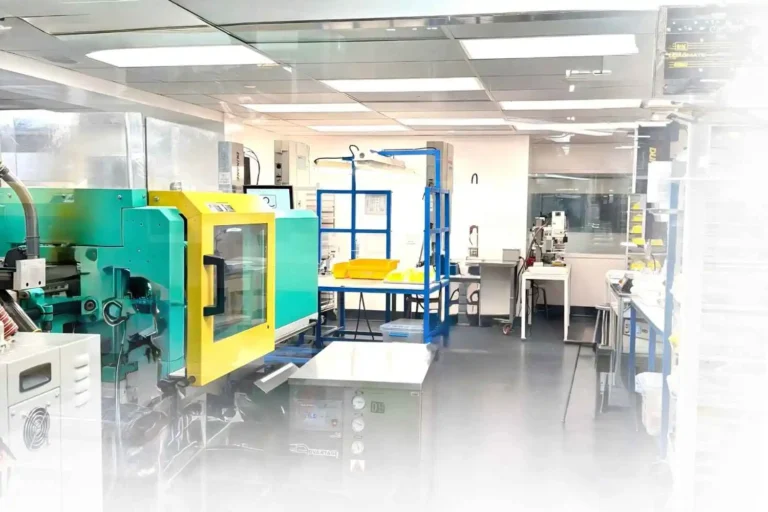
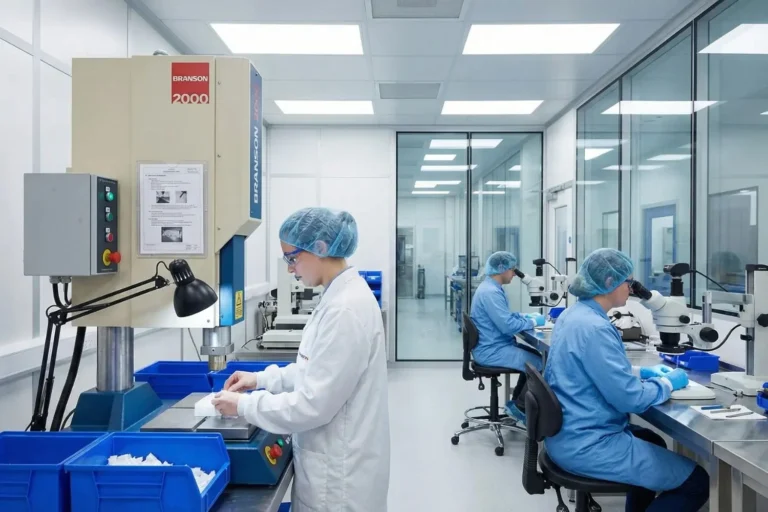
Vertical press molding supports more controlled molding conditions throughout production. The vertical setup helps stabilize inserts and maintain better alignment during molding cycles. This improves production accuracy and helps manufacturers maintain more consistent part formation across large volumes.
Automotive companies especially value vertical press molding in Mexico for its ability to:
- Improve mold alignment
- Reduce flash formation
- Maintain tighter dimensional precision
- Support better surface finish consistency
These advantages become increasingly important as automotive production moves toward more automated and component-dense manufacturing systems. Modern automotive companies are no longer looking for processes that simply produce parts. They are looking for manufacturing systems that can maintain consistency, repeatability, and precision across high-volume production environments.
This is exactly why vertical press molding in Mexico continues to create strong value across modern automotive manufacturing.
2. Automotive Systems Are Becoming More Component-Integrated
Modern vehicles now depend on far more integrated component systems than before. Automotive manufacturers are combining plastic, metal, electrical terminals, and threaded elements within the same assemblies. They are opting for them to support compact designs, electronic functionality, and improved system efficiency. This shift is especially visible in:
- Connectors
- Sensor housings
- Electrical assemblies
- EV-related systems
These components are no longer simple molded parts. Many of them, in fact, require multiple materials and embedded inserts to function correctly within modern automotive systems. That is where manufacturing becomes more demanding.
Even slight insert movement during molding can affect alignment, electrical connectivity, or final assembly performance. Problems at this stage often lead to fitment inconsistencies, assembly complications, or reduced long-term reliability.
Vertical Press Molding Helps Maintain Insert Accuracy
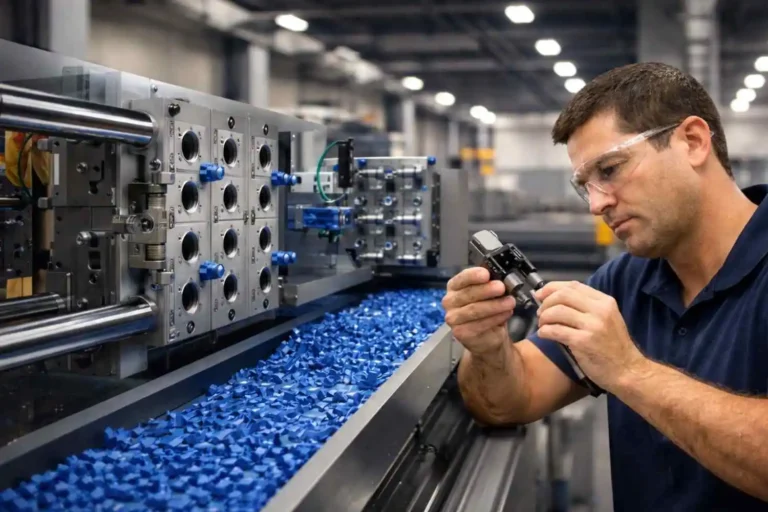
This is one of the biggest reasons why automotive companies increasingly rely on vertical press molding in Mexico. The vertical molding setup naturally uses gravity to help stabilize inserts throughout production. This improves insert positioning and reduces movement during molding cycles. This benefit of vertical molding helps manufacturers maintain better consistency across complex automotive components.
Vertical press molding in Mexico is especially valuable in applications where plastic and metal elements must function together within the same component structure. Their advantage becomes even more important in EV manufacturing. These vehicles depend heavily on integrated electrical systems, terminals, and sensor-based assemblies that require highly accurate insert placement.
This is exactly how vertical press molding in Mexico helps automotive companies maintain:
- Production accuracy
- Improve assembly consistency
- Support increasingly complex vehicle systems
3. Automotive Manufacturing Is Becoming More Automation-Driven
Vehicle production today depends heavily on speed, consistency, and stable output across large production volumes. This is one of the biggest reasons why automotive companies are investing more aggressively in automated manufacturing systems. Modern production environments are now expected to support:
- Faster production cycles
- Consistent output
- Reduced manual dependency
- Scalable production environments
This shift is also changing what molding systems in Mexico must deliver. Automotive companies are no longer looking for processes that only increase output. They need manufacturing systems that can integrate smoothly into automated production environments while maintaining precision and repeatability across every cycle.
Vertical Press Molding Supports Automated Manufacturing
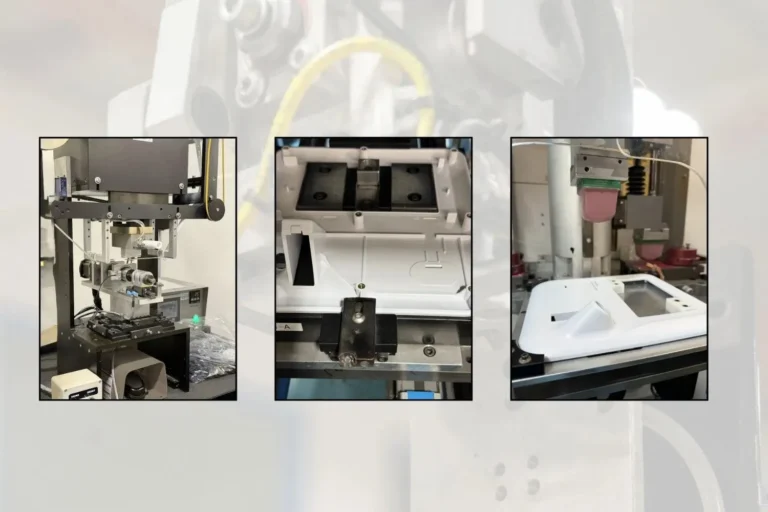
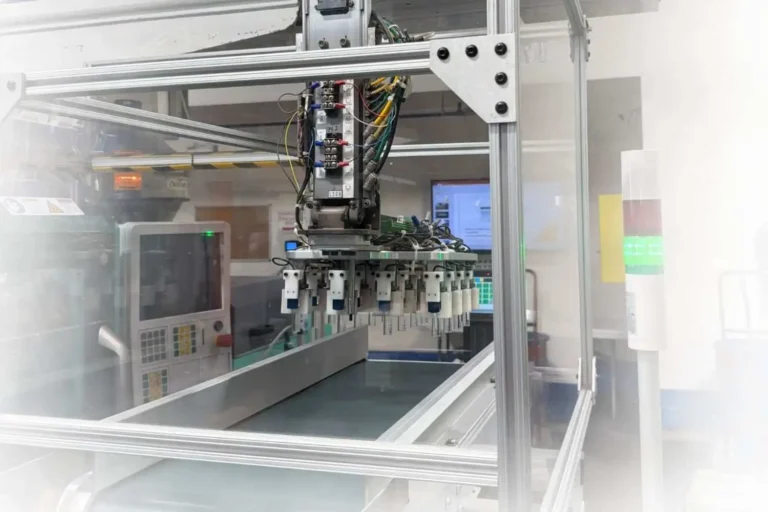
This is exactly where vertical press molding in Mexico becomes increasingly valuable. Vertical molding systems work efficiently with rotary tables, robotic loading systems, and automated insert placement. These technologies help manufacturers:
- Maintain more stable molding conditions
- Reduce variation across production cycles
- Improve repeatability during high-volume production
- Support better production scalability
The advantage becomes even more important as automotive manufacturing moves toward Industry 4.0 production environments. Modern automotive production systems now depend heavily on connected, automated, and precision-driven manufacturing operations.
Vertical press molding in Mexico supports this transition by helping manufacturers maintain consistency, efficiency, and production control within highly automated production systems.
4. Automotive Production Depends on High Repeatability at Scale
Automotive manufacturing operates at extremely high production volumes. Thousands of components are produced continuously across long production cycles, where consistency must be maintained throughout the entire process. Moreover, automotive companies cannot afford large variations between parts. Even small inconsistencies here can eventually affect assembly alignment, fitment accuracy, or overall vehicle reliability.
This is where repeatability becomes critical. Manufacturers today are not only focused on increasing production output. They are equally focused on maintaining stable and predictable production conditions across every cycle. This is especially important in automated automotive environments where production systems depend heavily on consistency. Modern automotive companies, therefore, look for molding systems that can support:
- Repeatable production cycles
- Stable molding conditions
- Reduced variation between parts
- Consistent output across large production volumes
Vertical Press Molding Supports Stable High-Volume Production
Maintaining repeatability across large production volumes requires stable molding conditions throughout every cycle. This is where vertical press molding in Mexico becomes increasingly valuable for automotive manufacturers.
Vertical press molding helps maintain better consistency during high-volume production. The process supports more controlled molding conditions, which helps reduce unnecessary variation between components across long production runs.
That level of consistency becomes extremely important in automotive manufacturing. After all, modern production systems depend heavily on accurate assembly, reliable fitment, and predictable component performance throughout the manufacturing process.
Better consistency across production cycles helps manufacturers:
- Improve assembly accuracy
- Reduce production disruptions
- Maintain more reliable large-scale operations
This is one of the key reasons why automotive companies continue relying on vertical press molding in Mexico. The process supports stable and repeatable high-volume automotive production.
5. Mexico’s Automotive Ecosystem Is Accelerating Adoption
Mexico’s automotive industry has expanded rapidly over the last several years. The country continues to attract major automotive investment due to its manufacturing infrastructure and skilled workforce. Mexico’s proximity to the U.S. market also plays a part here. At the same time, nearshoring and EV production are further accelerating manufacturing growth across the region.
This growth is not limited to vehicle assembly alone. The expansion of automotive production also increases demand for scalable and precision-driven manufacturing processes. Manufacturers now require production systems that can support:
- Higher production volumes
- Automated manufacturing environments
- Precision component production
- Faster and more reliable supply chains
This is exactly where vertical press molding in Mexico continues to gain momentum. The process aligns naturally with the direction automotive manufacturing is moving toward.
Modern vehicle production depends heavily on automation, repeatability, and integrated component systems. Vertical press molding supports these requirements while helping manufacturers maintain production efficiency and consistency at scale. That is why the growth of vertical press molding in Mexico is closely connected to the expansion of the automotive industry itself.
Conclusion
The growing importance of vertical press molding in Mexico is closely connected to the evolution of automotive manufacturing itself. Modern vehicle production now depends on greater precision, integrated component systems, and automation compatibility. They also depend on stable high-volume performance across every stage of manufacturing.
These production requirements are continuously increasing. Such changes are causing automotive companies to place greater importance on manufacturing processes that can maintain consistency, repeatability, and long-term production reliability at scale. This is exactly where vertical press molding in Mexico continues to create value across the automotive industry.
At Crafttech, we understand these evolving manufacturing demands. We are here to support automotive companies with molding solutions designed for precision-driven, scalable, and reliable production operations. Contact us for consultation.
FAQs
1. Where are car parts made in Mexico?
Car parts in Mexico are commonly manufactured in regions like Nuevo León, Chihuahua, Guanajuato, and Coahuila. These regions support large automotive manufacturing and supply chain operations.
2. What car manufacturers are made in Mexico?
Major automotive manufacturers operating in Mexico include General Motors, Ford Motor Company, Toyota Motor Corporation, Nissan Motor Corporation, and Volkswagen Group. Mexico remains a major automotive manufacturing hub across North America.
3. How is vertical press molding in Mexico supporting modern manufacturing operations?
Vertical press molding in Mexico supports manufacturing operations requiring insert molding and precision component placement. The process also helps manufacturers maintain better production consistency across specialized manufacturing applications.