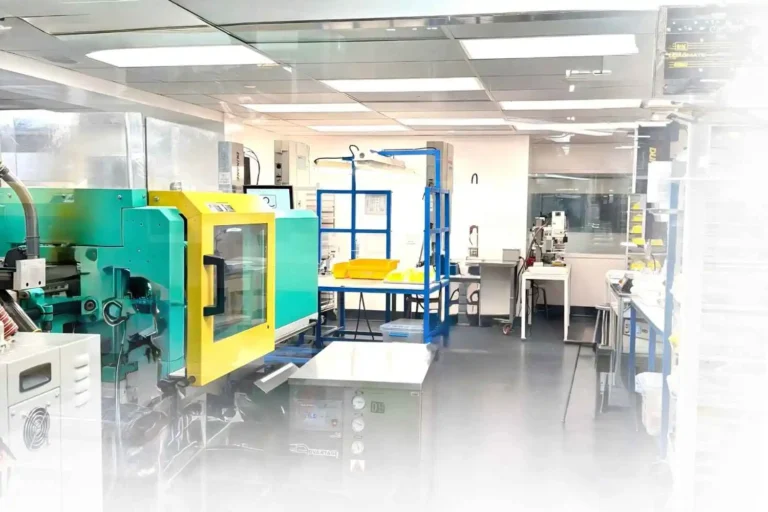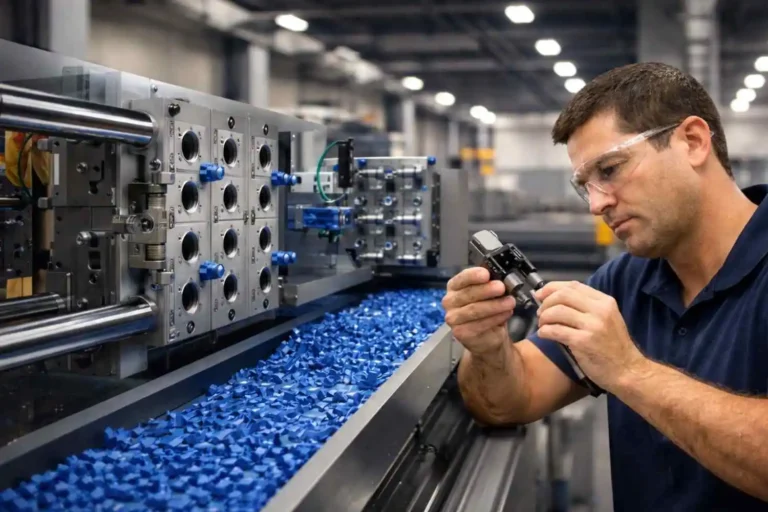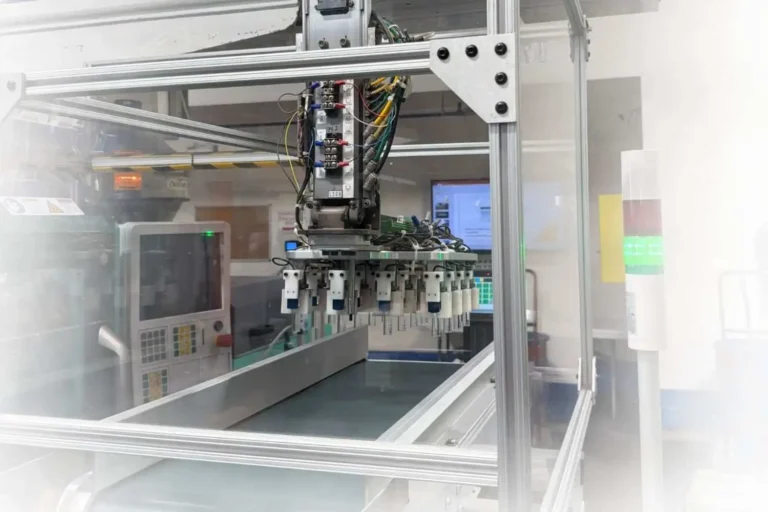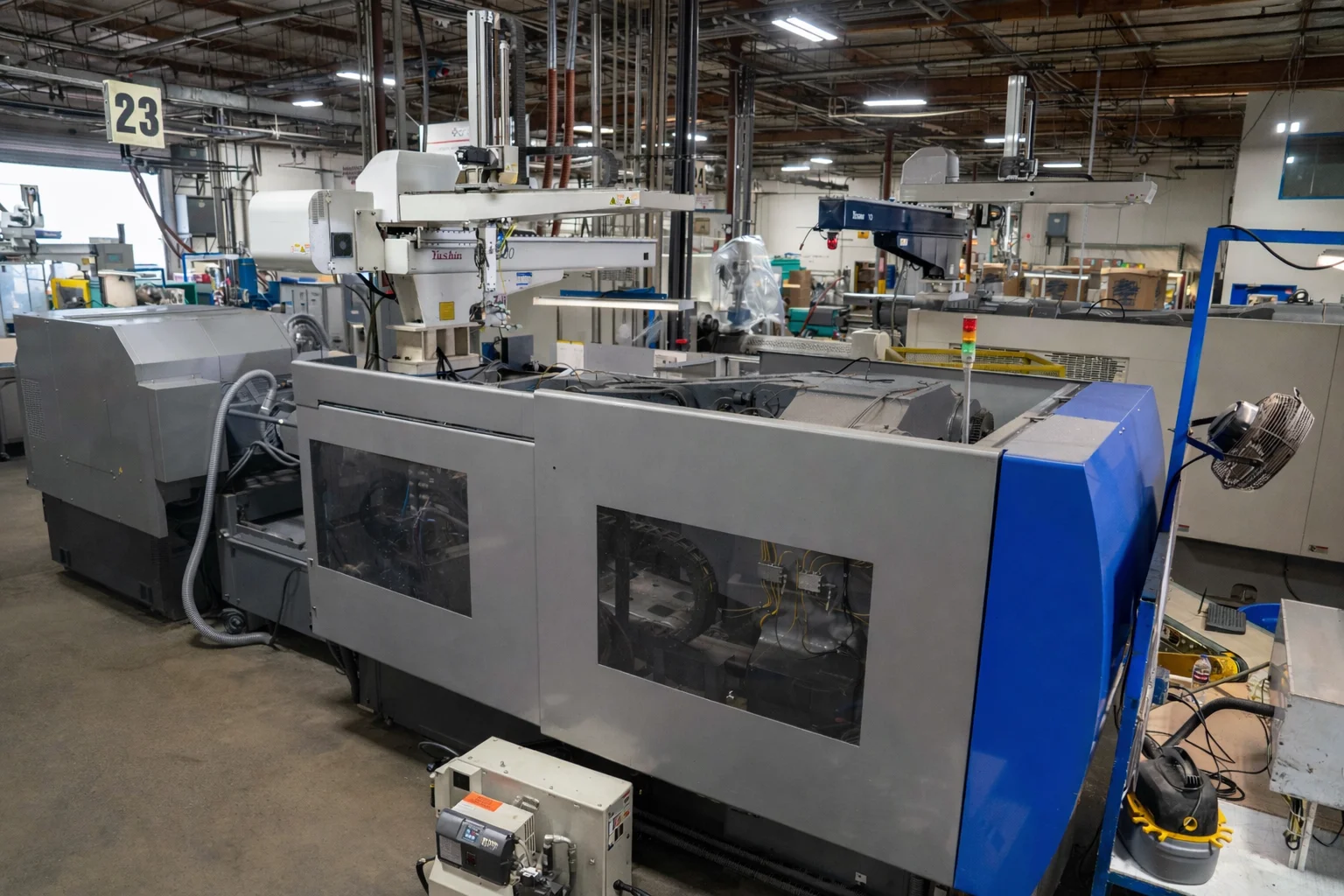
Every plastic component places different demands on the manufacturing process. While some parts can be produced using conventional molding methods, others require much greater control from the moment production begins. That need for greater control often arises when components include metal inserts, combine multiple materials, or must meet demanding quality and performance requirements.
Vertical press molding is not the right choice for every application. However, it offers great advantages when a component’s design creates manufacturing challenges that are difficult to control with conventional molding methods. The key is understanding where those challenges occur and how the right molding process helps overcome them. This article explores the most common situations when it is smart to choose vertical press molding in California.
When Your Component Relies on Metal Inserts for Performance
Many plastic components do more than provide shape or protection. They also need to fasten securely, carry electrical current, or withstand repeated mechanical stress. Plastic alone cannot always meet all these performance requirements.
Manufacturers often address this challenge by integrating metal inserts directly into the molded component. These inserts become a permanent part of the finished product and provide capabilities that plastic alone cannot deliver.
Depending on the application, these inserts may include:
- Brass threaded inserts
- Steel pins
- Bushings
- Electrical terminals
- Contact inserts
While metal inserts improve product performance, they also make the molding process more demanding. Every insert must remain in exactly the right position before molten plastic enters the mold. Even a slight shift at this stage can affect alignment, dimensional accuracy, or the overall performance of the finished component.
The challenge becomes even greater during high-volume production. A positioning error may seem insignificant in a single part. However, when the same variation occurs across hundreds or thousands of components, it quickly becomes a quality and production issue.
Choosing the right molding process becomes especially important at this stage. Manufacturers need a process that maintains consistent insert positioning throughout production while minimizing unnecessary variation from one cycle to the next.
Why Manufacturers Should Choose Vertical Injection Molding
Vertical plastic molding addresses these challenges by:
- Using gravity to naturally support insert positioning before injection
- Reducing the risk of insert movement during the molding process
- Minimizing scrap caused by insert misalignment
- Improving repeatability across long production runs
- Reducing reliance on manual adjustments and additional fixtures
- Helping minimize assembly issues during downstream manufacturing
Components that rely on accurate insert placement demand a manufacturing process that can deliver the same level of consistency throughout production. Vertical press molding meets those requirements while helping manufacturers produce more reliable, high-quality components.
When Precise Insert Placement Is Critical
Not every insert simply needs to stay inside the molded component. In many products, it also has to remain in an exact position. Even a slight shift here can prevent electrical contacts from lining up correctly or threaded inserts from matching the surrounding assembly.
That level of precision becomes increasingly important as product designs become smaller and more complex. Components used in medical devices, electronic connectors, sensors, and industrial controls often depend on exact insert alignment to perform as intended. A minor positioning error during molding can become a much larger problem once the product reaches final assembly.
Maintaining that level of precision throughout production is equally important. Manufacturers may need to produce hundreds or even thousands of identical components without compromising quality. Small variations that appear insignificant during molding can quickly affect product performance, assembly, and long-term reliability.
Applications like these demand a molding process that delivers the same level of precision from one production cycle to the next. This is where vertical press molding offers a clear manufacturing advantage.
How Vertical Press Molding in California Solves These Manufacturing Challenges
Vertical injection molding supports these precision requirements by:
- Providing better control over insert alignment during molding
- Helping maintain tighter dimensional tolerances
- Reducing defects caused by insert positioning errors
- Improving repeatability across high-volume production
- Minimizing unnecessary rework and quality corrections
Precise insert alignment often determines how well precision-engineered components perform. Vertical plastic molding provides the consistency needed to manufacture these components with greater confidence while maintaining high production quality.
When Overmolding or Multi-Material Components Are Required
Reducing the assembly of plastic components has become a priority for many manufacturers today. Every additional component increases assembly time, quality checks, and production costs. More importantly, every extra assembly step creates another opportunity for production errors.
Manufacturers producing complex plastic components often address this challenge by combining multiple materials into a single molded part. Instead of producing separate parts and assembling them later, they integrate different materials during the molding process itself. This approach simplifies product design while improving the functionality and overall performance of the finished component.
This manufacturing approach is commonly used for components such as:
- Plastic over metal components
- Electronic sensors and assemblies
- Hybrid plastic-metal components
- Electrical connectors
- Industrial control devices
Combining multiple materials into a single molded component also creates new manufacturing challenges. Every material must remain exactly where it belongs while the plastic flows and bonds around it. Even a slight variation at this stage can weaken the bond between materials, reduce structural strength, or affect the long-term performance of the finished component.
Applications like these demand a molding process that can maintain consistent material placement throughout production. This is where vertical plastic molding offers a clear manufacturing advantage.
How Vertical Press Molding in California Solves These Manufacturing Challenges
Vertical Injection Molding supports multi-material manufacturing by:
- Maintaining accurate material positioning throughout the molding process
- Supporting stronger and more consistent bonds between different materials
- Reducing the need for additional assembly operations
- Improving production consistency across every manufacturing cycle
- Helping produce reliable multi-material components with fewer quality issues
Successful over molding here actually depends on much more than combining different materials. It requires a manufacturing process that delivers the same level of control throughout production. Vertical Injection Molding in
California provides that consistency, helping manufacturers produce complex multi-material components with greater confidence and long-term reliability.
When Tight Tolerances and Repeatability Matter
Manufacturing expectations continue to rise across industries in the United States. Customers no longer expect one high-quality component. They expect every component leaving the production line to meet the same standard.
Meeting those expectations becomes much more challenging when plastic components are designed with tight tolerances. Components used in medical devices, electronic systems, and industrial equipment often leave very little room for variation. Here, even a minor difference between production cycles can affect assembly, product performance, or long-term reliability.
Producing one accurate component is only part of the equation. Manufacturers also need to produce hundreds or even thousands of identical components without compromising quality. That level of repeatability requires more than precision tooling. The entire molding process must remain stable from one production cycle to the next.
Consistency at this level depends on every stage of the molding process working together. Material flow, insert positioning, mold performance, and process stability all play an important role in producing identical components throughout a production run.
Vertical Press Molding in California Delivers the Greatest Value Here
Vertical Injection Molding supports repeatable production by:
- Maintaining tighter process control throughout production
- Supporting consistent dimensional accuracy across production runs
- Reducing variation between molded components
- Minimizing defects and unnecessary rework
- Helping manufacturers meet demanding quality standards more consistently
High-performance plastic components demand more than precision during a single production cycle. They require the same level of quality from the first component to the last. Vertical Injection Molding provides the consistency manufacturers need to achieve that standard with greater confidence.
When Reducing Secondary Assembly Improves Efficiency
Manufacturers no longer judge a molding process by the quality of the molded component alone. They also evaluate everything that happens after the component leaves the mold. Every additional handling step, assembly operation, or inspection adds production time. More importantly, each step creates another opportunity for variation, delays, and quality issues.
This shift has encouraged manufacturers producing complex plastic components to simplify the entire manufacturing process instead of optimizing individual stages. The fewer production steps required after molding, the easier it becomes to maintain consistent quality while reducing lead times and overall manufacturing costs.
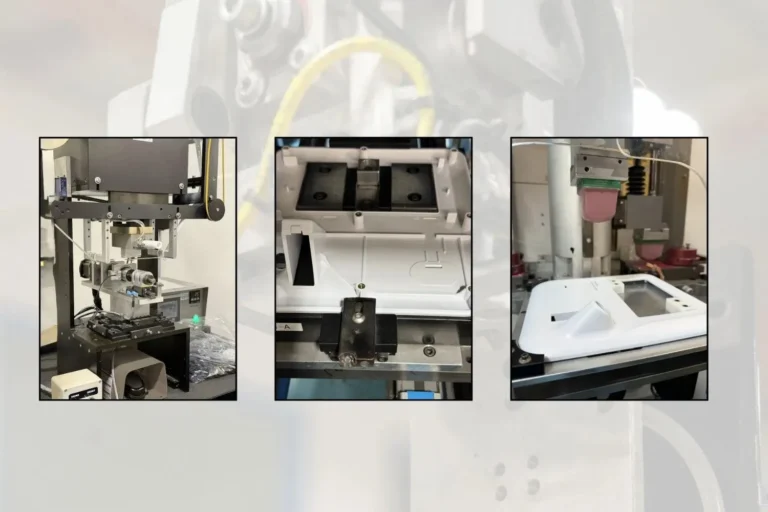
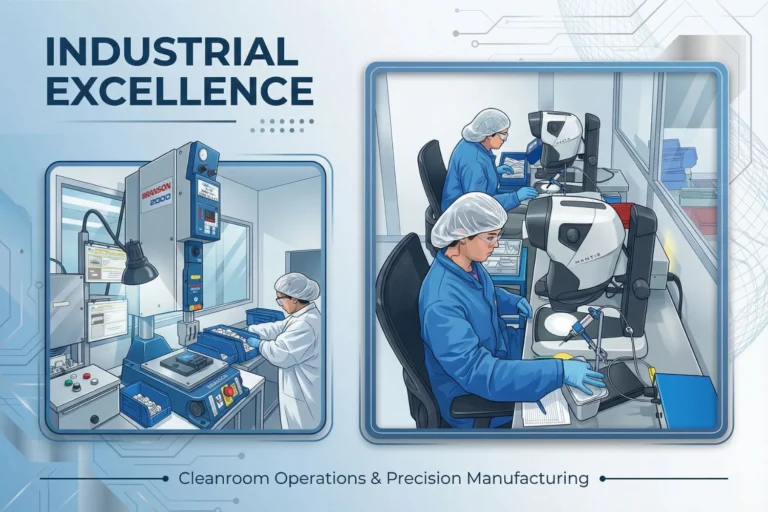
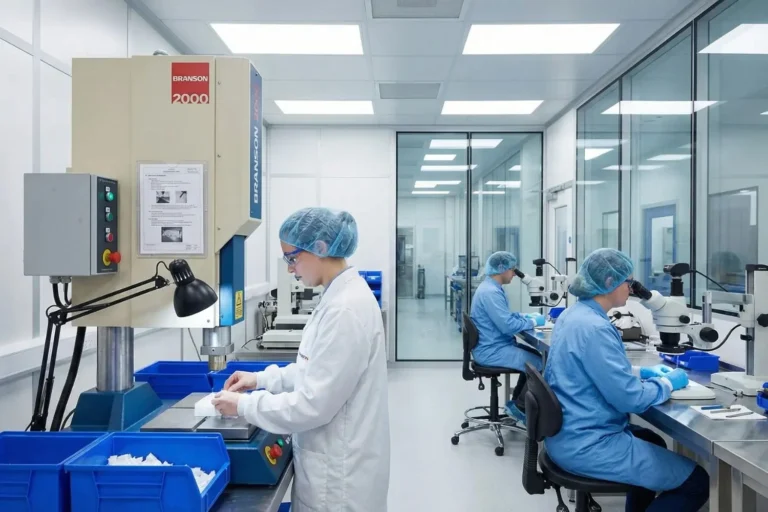
Many of these efficiencies are determined long before final assembly begins. The molding process influences how components move through inspection, ultrasonic welding, cleanroom assembly, decoration, and other production stages. A well-planned molding process helps reduce unnecessary handling while creating a smoother and more efficient manufacturing workflow.
Why Vertical Plastic Molding Is the Right Choice
Vertical Injection Molding supports downstream manufacturing by:
- Reducing the need for unnecessary secondary assembly operations
- Creating components that integrate more efficiently with ultrasonic welding and decoration processes
- Supporting smoother transitions into cleanroom assembly where required
- Reducing unnecessary handling between manufacturing stages
- Complementing lean manufacturing strategies that improve production flow and efficiency
Manufacturing efficiency depends on much more than producing a quality molded component. It also depends on how efficiently that component moves through every stage of production. Vertical press molding in California helps manufacturers build a more streamlined manufacturing process that supports consistent quality, shorter lead times, and greater operational efficiency.
Conclusion
Vertical press molding in California is the best choice when a plastic component demands more than a conventional molding process can reliably deliver. The decision ultimately depends on what the component demands from the manufacturing process. Products that require accurate insert placement, tighter process control, multi-material molding, or greater production consistency often benefit from the additional control that Vertical Injection Molding provides.
Not sure whether vertical injection molding is the right fit for your application? At Craftech Plastics, we help manufacturers determine the most suitable molding approach based on their product design, performance requirements, and production goals. The right decision starts with understanding the application, and that’s exactly where our team can help.
FAQs
What are the 4 types of molding?
The four common plastic molding processes are injection molding, compression molding, blow molding, and rotational molding. Each process is designed for different materials, product designs, and manufacturing requirements.
What is the vertical molding process?
Vertical molding is a manufacturing process where the mold is positioned vertically, allowing inserts to be placed accurately before plastic is injected. It is commonly used for insert molding applications that require greater precision, repeatability, and production consistency.
When should vertical press molding be used?
Vertical press molding is often the best choice when components require metal inserts, tight tolerances, overmolding, or consistent insert positioning. It provides greater manufacturing control for applications where precision and repeatability are critical.
What are the advantages of vertical press molding?
Vertical press molding helps improve insert positioning, reduce manufacturing variation, and support consistent part quality. It also minimizes scrap, improves repeatability, and helps manufacturers produce reliable plastic components more efficiently.