Should advanced automation influence your decision when choosing a partner for injection molding in Southern California? The answer is becoming increasingly important for many manufacturers.
Production requirements continue to evolve, and the expectations placed on manufacturing partners are changing with them. Companies are no longer looking for suppliers that simply produce parts. They want partners that can support long-term growth, improve operational performance, and adapt as manufacturing requirements become more complex.
This article explores why advanced automation has become an important part of that conversation and what it means for manufacturers evaluating their next production partner.
Modern Injection Molding Requires More Than Production Capacity
Manufacturing expectations around plastic injection-molded components have changed a lot in recent years. Companies no longer evaluate manufacturing partners based only on production capacity or part pricing. They also expect consistent quality, repeatable processes, and the ability to scale production without compromising performance.
Meeting these expectations requires greater control throughout the manufacturing process. Every stage, from material handling and process control to quality inspection and production planning, must work together to create stable and predictable manufacturing outcomes.
This shift has changed how manufacturers approach automation in injection molding. Today, automation isn’t viewed as a way to simply increase output. Many companies now see it as a strategic investment that improves manufacturing efficiency, strengthens process consistency, and supports long-term operational growth.
This shift has led to rising demand for automation in injection molding around the globe, including Southern California.
Automation Creates More Stable Manufacturing Operations
Manual manufacturing processes can often perform well during lower-volume production. Skilled operators can easily adapt to changing conditions and help keep production moving efficiently. However, maintaining that same level of consistency becomes far more challenging as production volumes increase and manufacturing programs become more complex.
As output grows, even small variations in part handling, process timing, or production parameters can affect product quality, cycle times, and overall manufacturing efficiency. What may seem like a minor inconsistency during one production cycle can become a much larger issue when repeated thousands of times.
This is where automation in injection molding creates a massive advantage. Rather than replacing skilled employees, automation helps standardize repetitive manufacturing tasks and create more stable production environments. The result is greater process consistency and more predictable manufacturing outcomes across every production run.
A more stable manufacturing process supports:
- Repeatable Cycle Times that improve consistency throughout long production runs and create more predictable output.
- Better Process Control that reduces variation and helps maintain tighter manufacturing standards.
- Consistent Part Handling that minimizes damage and reduces handling-related defects during production.
- Improved Production Flow that reduces interruptions and supports smoother manufacturing operations.
- Greater Manufacturing Efficiency through standardized processes that strengthen repeatability and long-term production stability.
The value of automation in injection molding around Southern California extends well beyond increasing output. It creates a more controlled manufacturing environment where quality, consistency, and production efficiency can be maintained as manufacturing demands continue to grow.
Advanced Automation Improves Every Stage of the Manufacturing Process
Automation is no longer limited to a single machine or production task. Modern manufacturing environments rely on connected technologies that work together to improve consistency, reduce variation, and support more efficient production from start to finish.
This integrated approach is helping reshape injection molding in Southern California. Manufacturers are no longer relying on manual intervention alone.
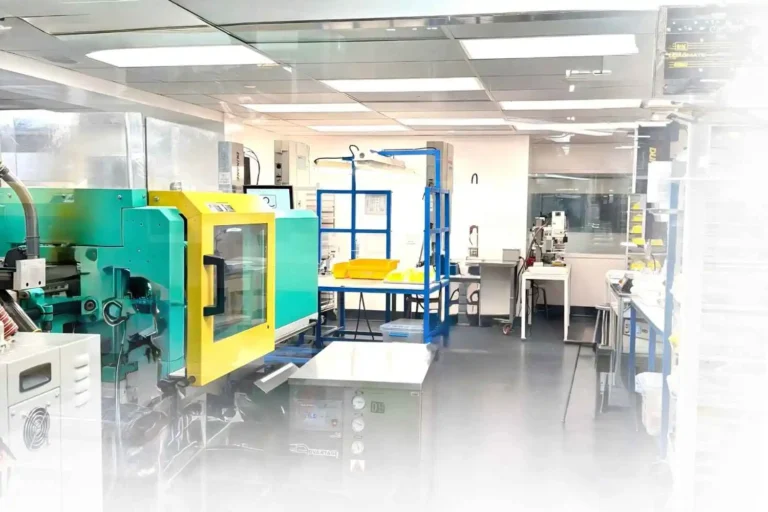
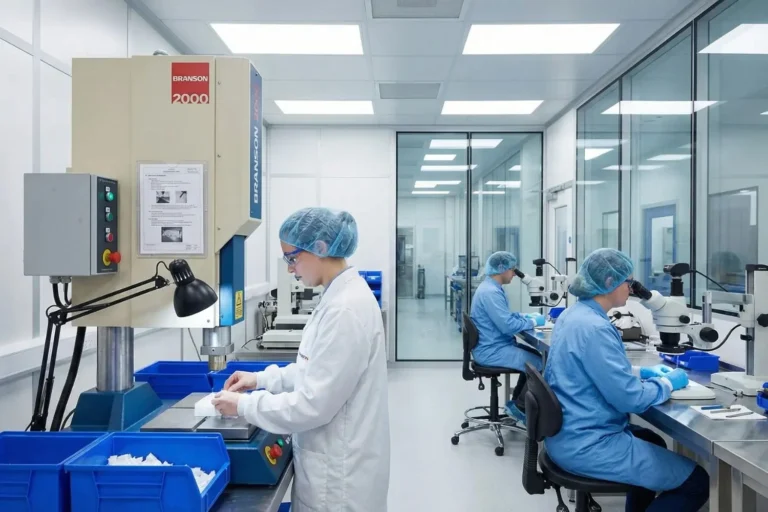
Advanced automation no longer supports just one stage of the injection molding process in Southern California. Instead, it connects multiple production functions to create a more controlled and consistent manufacturing environment. Material handling, part inspection, process control, and production monitoring work together to reduce variation and strengthen overall production performance.
Modern injection molding operations benefit from advanced automation through:
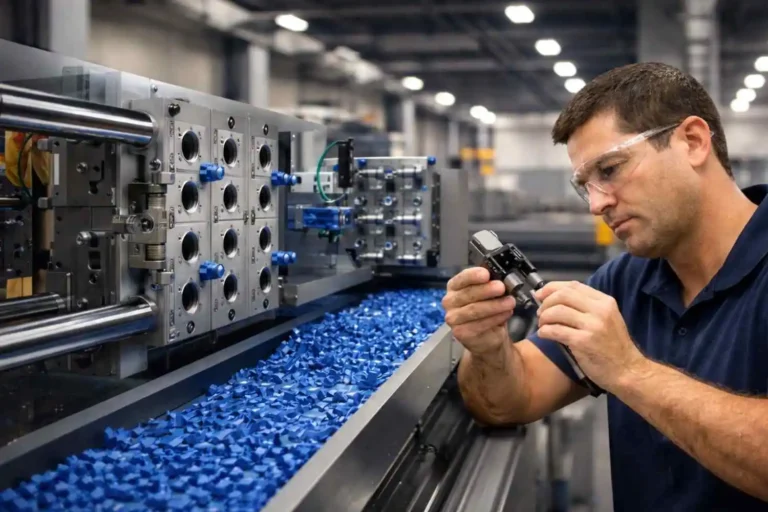
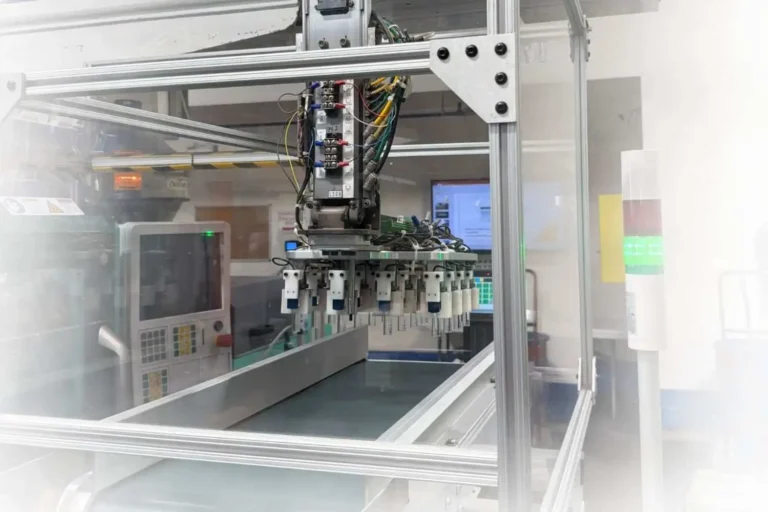
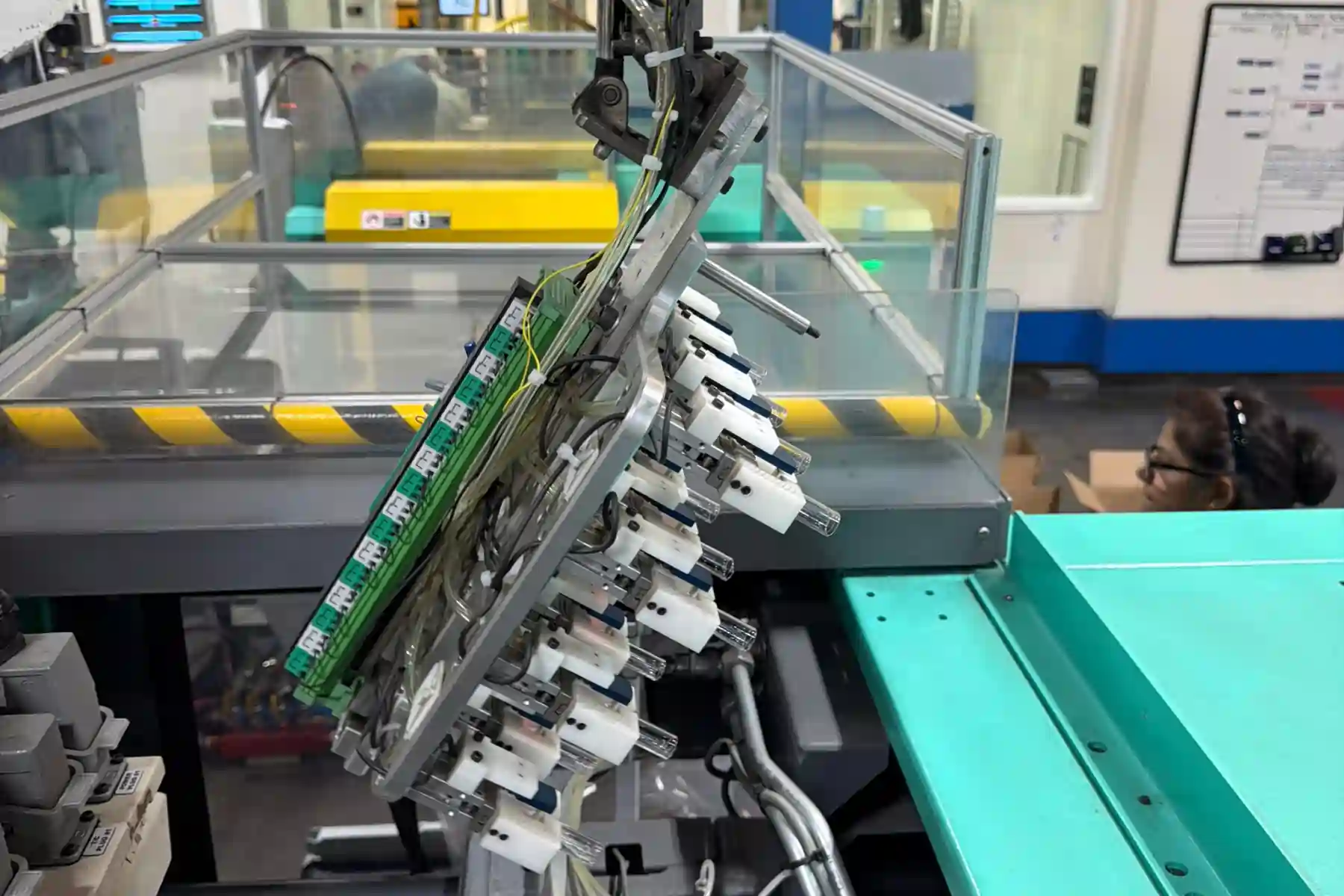
- Automated Part Handling that reduces manual variation and creates more repeatable production cycles.
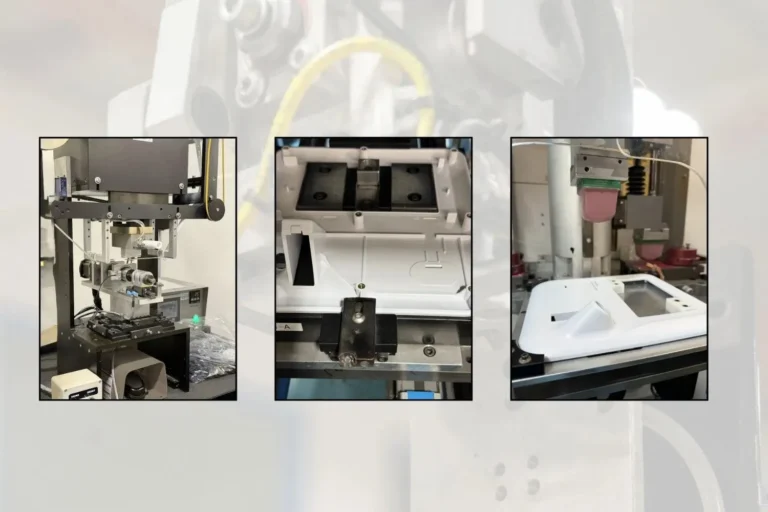
- Insert Molding Automation that improves placement accuracy and strengthens process consistency.
- Collaborative Robotics that perform repetitive secondary operations while allowing skilled employees to focus on quality and process optimization.
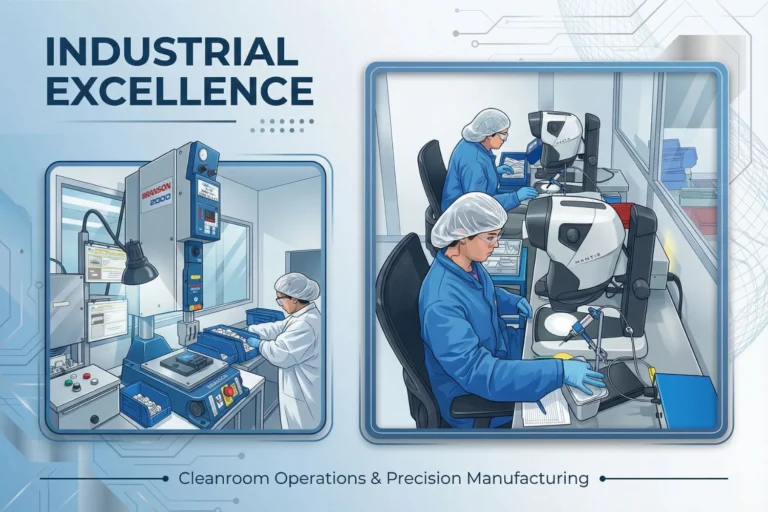
- Machine Vision Inspection that identifies defects earlier and supports more consistent quality standards.
- Production Monitoring Systems that provide greater visibility into manufacturing performance and help identify potential issues before they affect production.
Advanced automation creates a more reliable injection molding process. It reduces variation across multiple production stages and improves coordination throughout manufacturing. This helps manufacturers scale production with greater confidence while maintaining the quality and consistency their customers expect.
Why Advanced Automation Gives Injection Molding in Southern California a Competitive Advantage
Advanced automation does not create a competitive advantage on its own. Its success depends on the manufacturing environment in which it operates. Engineering expertise, skilled personnel, and advanced production capabilities all play an important role in helping automated systems deliver consistent and repeatable results. This is where injection molding in Southern California stands apart.
Southern California combines advanced manufacturing expertise with a strong culture of innovation and process improvement. These strengths allow manufacturers to adopt automation more effectively and maximize its long-term value across complex production programs. Manufacturers investing in injection molding in Southern California often benefit from:
- Engineering Expertise that helps manufacturers integrate automation more effectively and improve long-term production performance.
- Advanced Manufacturing Capabilities that allow automated systems to support increasingly complex production requirements.
- Innovation-Driven Manufacturing Practices that encourage continuous process optimization and greater adoption of advanced automation.
- A Skilled Manufacturing Workforce that manages and improves automated production systems rather than repetitive manual operations.
- Scalable Production Environments that help manufacturers expand output while maintaining the consistency automation is designed to deliver.
Together, these advantages allow advanced automation to deliver greater value throughout the injection molding process. Manufacturers in Southern California benefit from stronger process consistency and improved manufacturing efficiency. They also build production systems that can scale more confidently as business requirements evolve.
Advanced Automation Should Be Backed by Manufacturing Expertise
Investing in advanced automation is an important step, but technology alone cannot guarantee manufacturing success. The value of automation depends on how well it is integrated into the overall production process and supported throughout the product lifecycle.
Engineering decisions, tooling strategies, process development, and quality planning all influence how effectively automated systems perform. When these elements work together, manufacturers achieve greater consistency, stronger process control, and more reliable production outcomes.
That’s the approach we take at Craftech Plastics. Our team combines engineering, tooling, injection molding, and advanced manufacturing capabilities into one connected process. This helps customers maximize the value of automation while building a stronger foundation for long-term manufacturing success.
Manufacturers choosing injection molding in California need more than modern equipment. They need a manufacturing partner that understands how to turn advanced automation into long-term operational success. That’s exactly what our integrated approach is designed to deliver.
FAQs
Why Is Automation Important in Modern Injection Molding?
Automation helps standardize repetitive manufacturing tasks and reduce process variation throughout production. This supports greater manufacturing consistency, improved efficiency, and more predictable production outcomes across long manufacturing runs.
How Does Automation Improve Injection Molding Quality?
Automation improves quality by maintaining consistent production parameters, reducing manual variation, and supporting repeatable manufacturing processes. These capabilities help manufacturers produce plastic components with greater accuracy and dependable quality.
What Automated Technologies Are Commonly Used in Injection Molding?
Modern injection molding facilities often use robotic part handling, automated insert placement, machine vision inspection, production monitoring systems, and collaborative robotics. Together, these technologies improve process control and strengthen manufacturing performance.
Why Should Manufacturers Consider Injection Molding in Southern California?
Injection molding in Southern California combines advanced automation with engineering expertise, skilled manufacturing teams, and scalable production capabilities. These advantages help manufacturers improve operational efficiency while supporting consistent long-term production quality.