What should you expect from a manufacturing partner once you hand over your product design? Should they simply build the mold and start producing parts? Or should they be involved earlier, helping connect product requirements, design, materials, tooling, and production?
Those questions matter when you are evaluating an injection molding manufacturer for a new product or production program. The right injection molding partner does more than manufacture the finished part. They help identify problems early, make informed manufacturing decisions, and create a clearer path from product development to production.
This article explains what that process should look like and what you should expect from an experienced injection molding company in Southern California.
Understand the Product Before Planning Production
Do you think that a manufacturing partner can plan production until they understand what the product needs to achieve? No, right? That’s exactly why experts offering injection molding in Southern California do not just look at the CAD files. Instead, they focus on the requirements that will shape manufacturing. That includes:
- What the product needs to do: Its intended use, functional requirements, and performance requirements.
- What the part needs to achieve: Critical dimensions, tolerances, geometry, and features that affect performance.
- What production needs to support: Expected production volumes, assembly requirements, and other manufacturing requirements.
Checking all this gives the partner a clear understanding of the product before making decisions about materials, tooling, or the molding process.
Review the Product Design for Manufacturability
Understanding the product to be molded is only the first step. The next step is checking whether the design can move into production without creating avoidable tooling or molding problems. That is exactly where design for manufacturability (DFM) helps identify potential issues.
An expert injection molding partner usually reviews the part design to identify features that could affect:
- Moldability: Wall thickness, draft angles, ribs, bosses, and undercuts.
- Tooling: Parting lines, gate locations, ejection, and other mold design requirements.
- Part quality: Dimensional stability, filling, cooling, shrinkage, and potential warpage.
- Production: Features that could affect cycle time, consistency, or repeatability.
The goal beyond this is not to change the product simply because changes are possible. It is to identify design improvements that can make the part easier to mold and the production process more reliable before tooling begins.
This allows an injection molding partner to address manufacturability issues while they are still easier to fix. It also creates a stronger connection between product design and the tooling decisions that follow, which is especially important when planning injection molding in Southern California.
Align Material Selection With Product and Production Requirements
A product can have a well-designed, manufacturable part and still face problems if the material does not suit its requirements. The right material needs to perform as expected in the application and behave predictably during molding.
That is why an experienced manufacturing partner evaluates material selection from both sides! That includes reviewing what the molded part requires and what production demands. To do so, they often consider:
Product performance: Mechanical properties, chemical resistance, temperature resistance, durability, and flexibility.
Part requirements: Dimensional stability, surface finish, tolerances, and the intended application.
Molding requirements: Melt flow, shrinkage, cooling requirements, processing conditions, and material compatibility.
These factors can influence more than how the finished part performs. The selected resin can also affect mold design, processing conditions, cooling, shrinkage, and final part dimensions.
A professional injection molding partner in Southern California therefore does not treat resin selection as a separate decision. They evaluate material behavior alongside the product requirements and manufacturing process. The result is a material and process combination that is better suited to producing consistent parts as production scales.
Translate the Product Design Into Production Tooling
Once the product requirements, design, and materials are understood, those decisions need to be translated into a mold that can produce the part consistently. This is where an experienced plastics manufacturing partner brings product development into the tooling stage.
An expert partner uses the part geometry, material behavior, and manufacturing requirements to develop the mold design. That can involve decisions around:
- Mold configuration: Core and cavity layout, parting lines, and the number of cavities.
- Material flow: Gate locations, runner systems, and cooling channels.
- Part removal: Ejection systems, slides, lifters, and inserts.
Mold flow analysis and CAE can also help the partner identify potential filling, cooling, pressure, or warpage issues before mold construction begins. Addressing these concerns early can reduce the risk of discovering major problems after the tool has already been built.
Remember that good tooling does more than reproduce the CAD model. It creates a controlled and repeatable way to turn the product design into production parts. That connection is especially important when developing injection molding in Southern California for complex components. Why? Because the tooling decisions here can directly affect part quality, production consistency, and the ability to scale production.
Select the Molding Process That Fits the Product
Would the right manufacturing partner simply choose the molding process based on the machines they have available? Not if they are evaluating the product properly.
Some suppliers may recommend a process based mainly on their existing equipment. That can limit the production approach before the product’s actual requirements have been considered. But an expert injection molding partner in Southern California takes a different approach by looking at how the part needs to be produced.
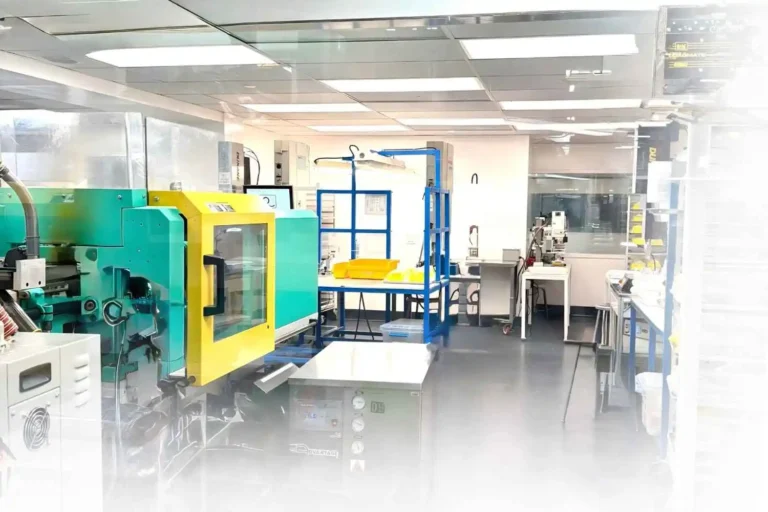
A component with inserts, for example, may benefit from vertical press molding in California because the setup can make insert placement more practical. Another product may be better suited to a different molding approach based on its design and production requirements.
The point is not to fit the product into a preferred process. It is to choose a process that can produce the part consistently and support its production requirements. That kind of process selection gives the product a better path from development into reliable production.
Validate the Product and Process Before Full Production
A completed mold does not automatically mean the product is ready for full production. An experienced partner understands that and hence often runs samples, inspects the parts, and refines the process where needed. They may evaluate:
- Part quality: Dimensions, tolerances, and functional requirements.
- Process performance: Molding conditions, repeatability, and consistency.
- Production readiness: Whether the process can reliably produce parts to the required specifications.
These steps give expert injection molding partners in Southern California a chance to identify and correct issues before larger production runs begin. It also helps them to establish repeatable production conditions needed to move the product from development into manufacturing.
Carry Engineering Support Into Production
Imagine what would happen when the product changes after production begins. Should a strong manufacturing relationship not end once the first production run is complete?
No, right? That’s why an experienced plastics manufacturing partner stays involved when a design changes, tooling needs modification, or a production issue requires attention. Their engineering team often uses production feedback to improve the process while maintaining product requirements.
This continued support helps connect engineering decisions with real production conditions. It also gives the product a more stable path as production requirements evolve.
Conclusion
Not every manufacturing partner takes the time to understand the product, review its design, and stay involved after production begins. That is why choosing the right company for injection molding in Southern California matters.
Thousands of manufacturers have partnered with Craftech because we take a connected approach to product development and production. Our teams bring engineering, mold making, injection molding, process development, validation, and ongoing production support together.
From the first design review to full-scale production, we help turn product requirements into reliable manufacturing processes.
Have a product ready for production? Talk to Craftech about your next project.
FAQs
1. What should I look for in an injection molding partner?
Look for a partner that provides engineering input before tooling begins. They should also support DFM, material selection, tooling, process validation, and production.
2. When should I involve an injection molding partner in product development?
Ideally, involve the partner before the design is finalized. Early involvement allows them to identify manufacturability and tooling concerns before they become costly production problems.
3. When is vertical press molding in California a good option?
Vertical press molding in California can suit parts that require insert placement or specific loading arrangements. The right process depends on the product design and production requirements.